
Write Like Maria Giesbrecht
5 Craft Moves Used In A Little Feral

Welcome to Under the Influence, a series where we study the poets we love and the craft choices that make their work unforgettable.
There are some poets who make you stop mid-line and think: How did she do that? Maria Giesbrecht, our June 10 guest for Inside the Manuscript, is one of those poets for me.
Her poems in A Little Feral feel surreal and devastating while still remaining grounded in image and narrative. They hold tension without overexplaining themselves. They create emotional impact through strange turns, unexpected comparisons, and endings that echo long after the poem is over.
So today I want to break down five craft moves she uses brilliantly in her poetry — techniques that create tension, strangeness, emotional resonance, and unforgettable endings. Not so we can imitate her voice, but so we can better understand the mechanics underneath it.
What feels like magic in a poem is usually precision.
Here are a few of my favorite poems by Maria Giesbrecht, along with the craft moves you can borrow and apply to your own writing.
1. The Surreal Effect
Maria often begins with a literal event before allowing the poem to enter a surreal emotional reality.
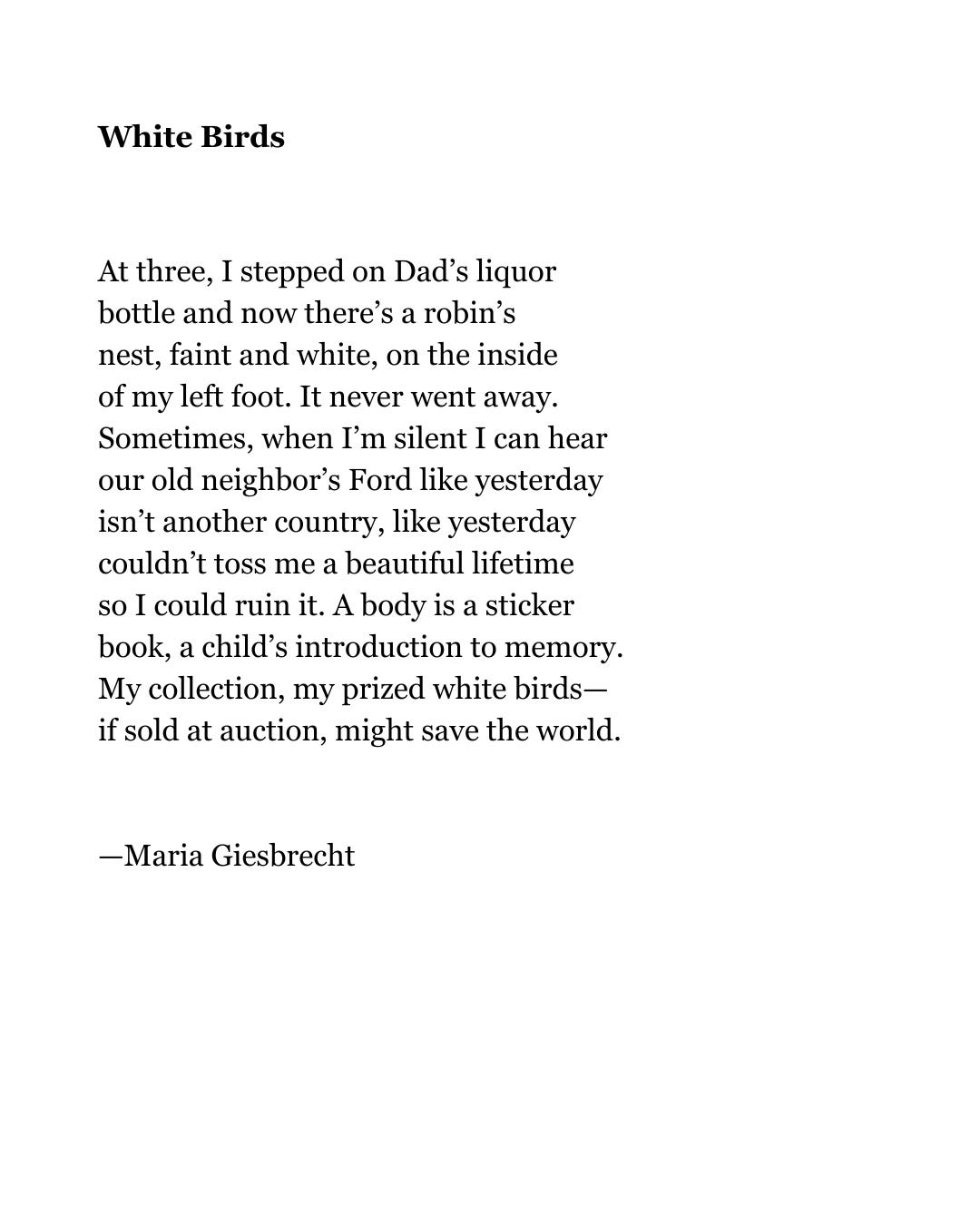
From White Birds:
“At three, I stepped on Dad’s liquor
bottle and now there’s a robin’s
nest, faint and white, on the inside
of my left foot.”
The poem establishes a believable cause, then gives us an impossible effect. That’s important.
The surreal image isn’t random decoration. It becomes the emotional reality of the poem. The speaker carries the wound physically. Memory becomes something living beneath the skin.
This creates tension because the reader understands two truths simultaneously:
this is impossible
this feels emotionally true
The surreal image allows the poem to communicate trauma, memory, and inheritance without directly explaining them.
Try This:
Write about a real event from your life, then give it a surreal consequence.
Examples:
heartbreak turns your teeth to blueberries
shame makes you grow antlers
grief fills the bathtub with moths
loneliness causes windows to frost over
The key is commitment. Once the poem establishes this new reality, stay inside it.
2. Unexpected Comparisons
Maria’s poems are filled with comparisons that feel emotionally surprising:
“A body is a sticker
book, a child’s introduction to memory.”
Or:
“like yesterday
isn’t another country”
These lines work because they avoid familiar language.
A weaker poem might say:
I feel nostalgic
I miss the past
my body carries memory
But Maria gives us images and comparisons that feel specific and alive.
“Yesterday isn’t another country” works because it reframes memory as geography. Suddenly nostalgia feels vast, unreachable, border-crossing.
And:
“A body is a sticker book”
doesn’t just describe memory — it transforms the body into something marked, collected, layered by experience.
Unexpected comparisons create energy because they force the reader to participate. We pause. We connect the emotional logic ourselves.
Try This:
Instead of naming an emotion directly, compare it to something strange, specific, or slightly off-center.
Try writing:
Anxiety is…
Desire is…
Memory is…
Loneliness is…
Push past your first instinct. The strongest comparisons usually arrive after the obvious ones are exhausted.
3. Leave on an Echo
Maria often uses repetition to create emotional resonance without fully explaining the meaning.
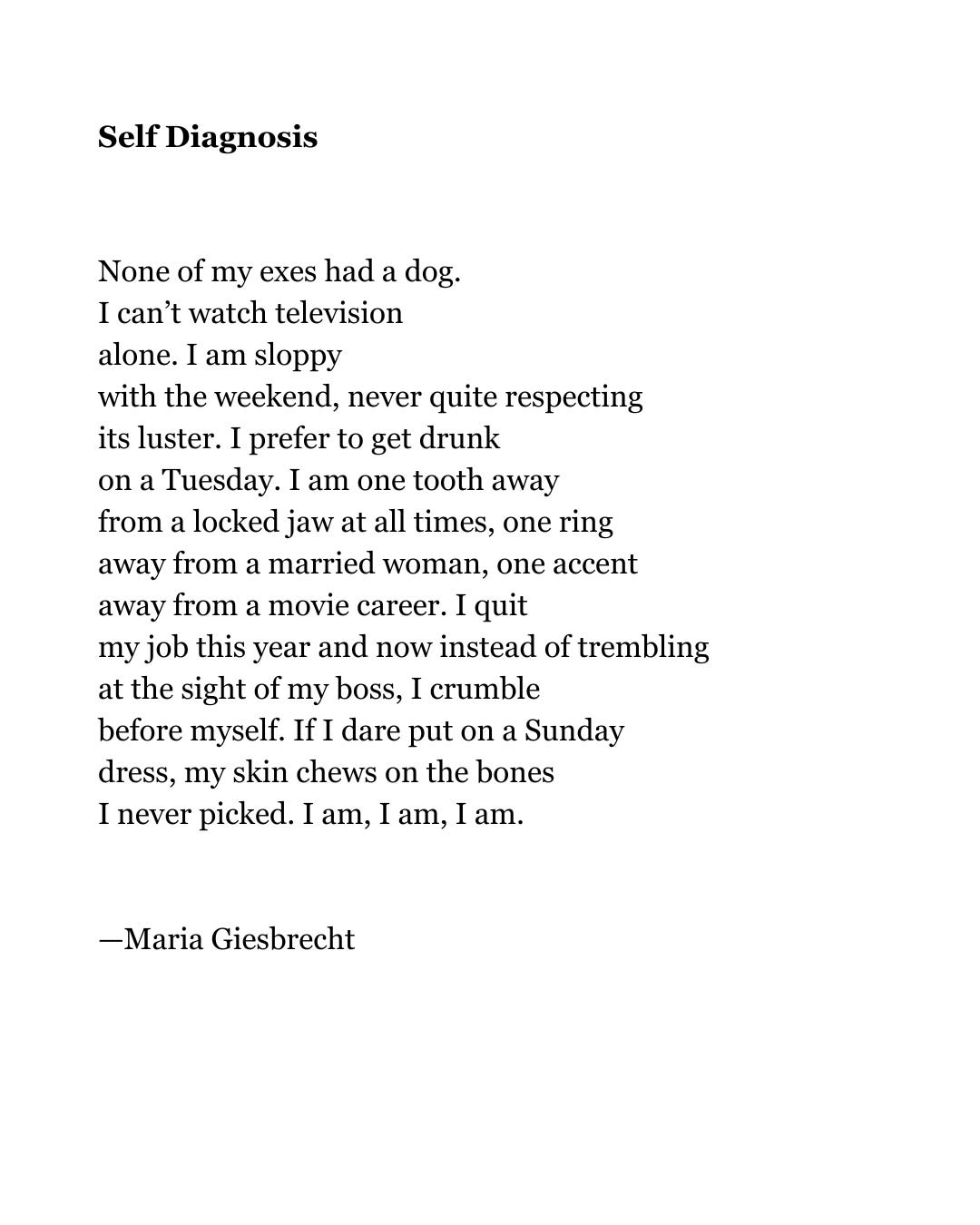
From Self Diagnosis:
“I am, I am, I am.”
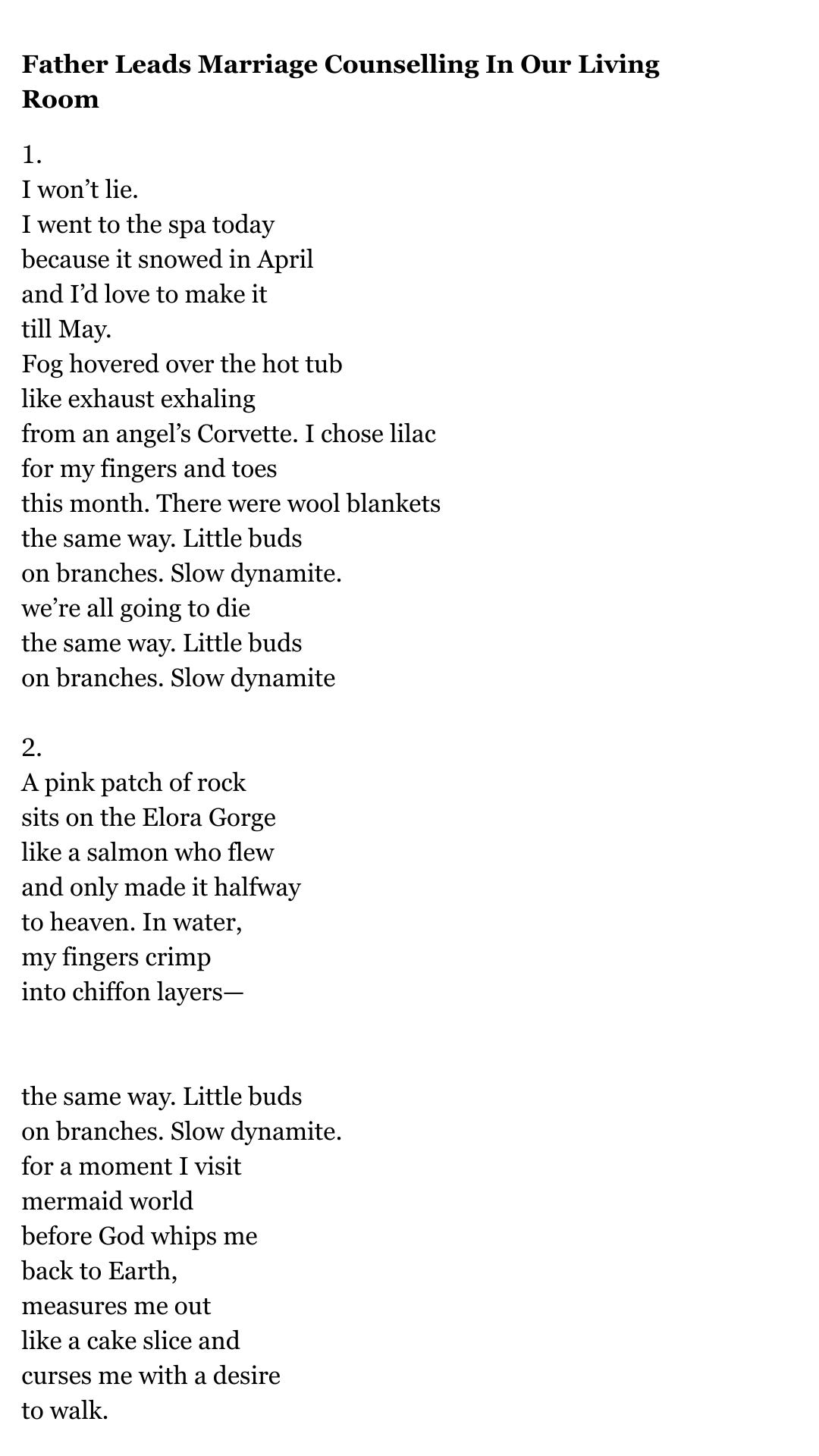
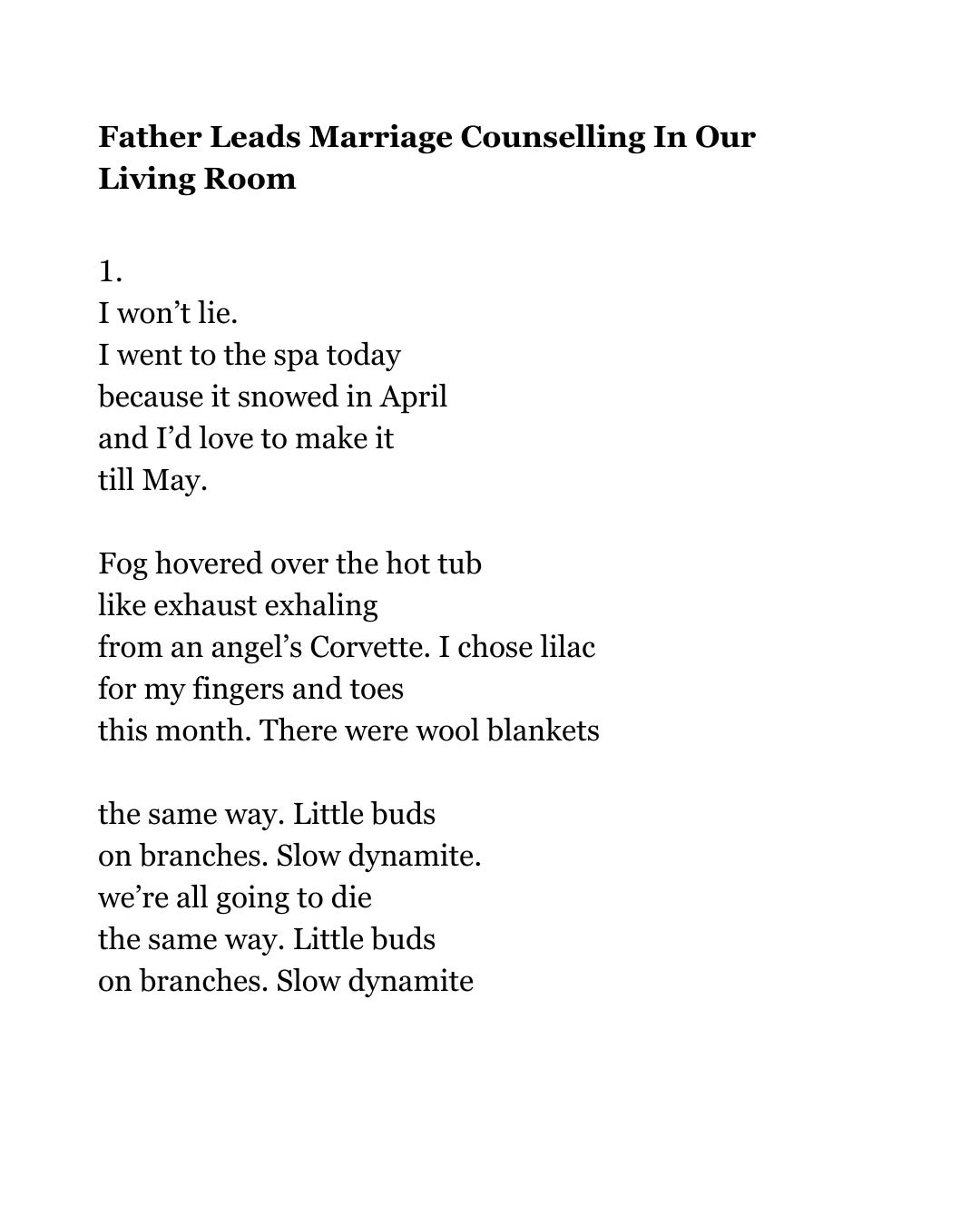
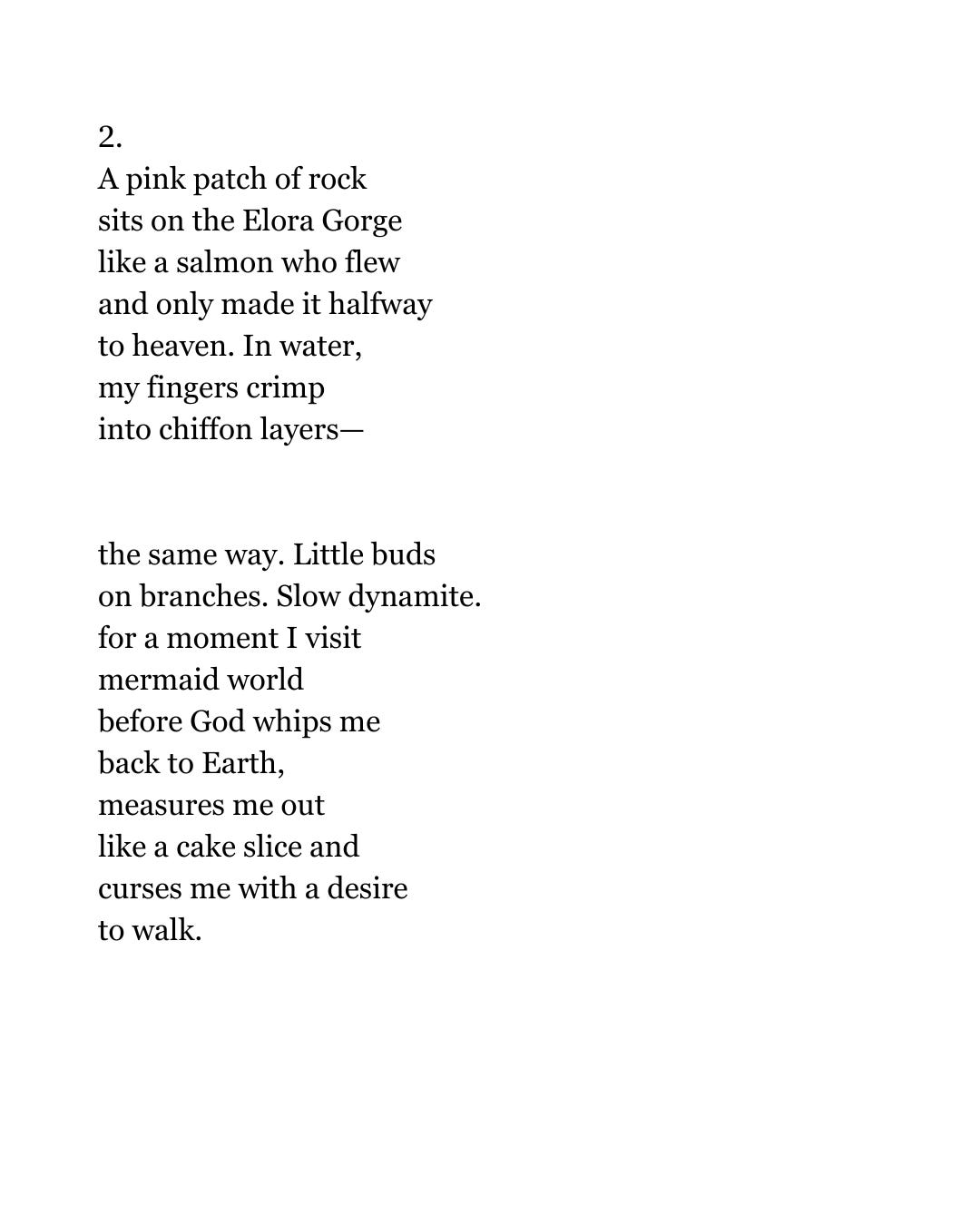
Or from Father Leads Marriage Counseling In Our Living Room:
“Little buds
on branches. Slow dynamite.”
The repetition creates emotional pressure.
Notice that neither phrase fully resolves itself. The poem leaves us suspended inside the language rather than neatly concluding it.
“I am, I am, I am,” which is borrowed from Sylvia Plath’s The Bell Jar, becomes haunting precisely because the sentence never finishes. The speaker exists in a state of becoming, uncertainty, and fragmentation.
And:
“Little buds on branches. Slow dynamite.”
works because it pairs growth with danger. Tenderness with explosion. Every repetition deepens the association.
This is what I mean by leaving the poem on an echo.
The reader feels the emotional vibration of the line long after reading it, even if they can’t fully paraphrase its meaning.
Try This:
Find a phrase in your poem that carries emotional tension and repeat it:
exactly
with variation
in different emotional contexts
Then ask:
Does the repetition deepen the meaning?
Does it create obsession, longing, dread, tenderness?
Does the poem become more musical or more haunted?
Repetition works best when it evolves emotionally each time it appears.
4. Crowd Opposites
One of Maria’s strongest techniques is placing opposites beside one another to heighten tension.
For example:
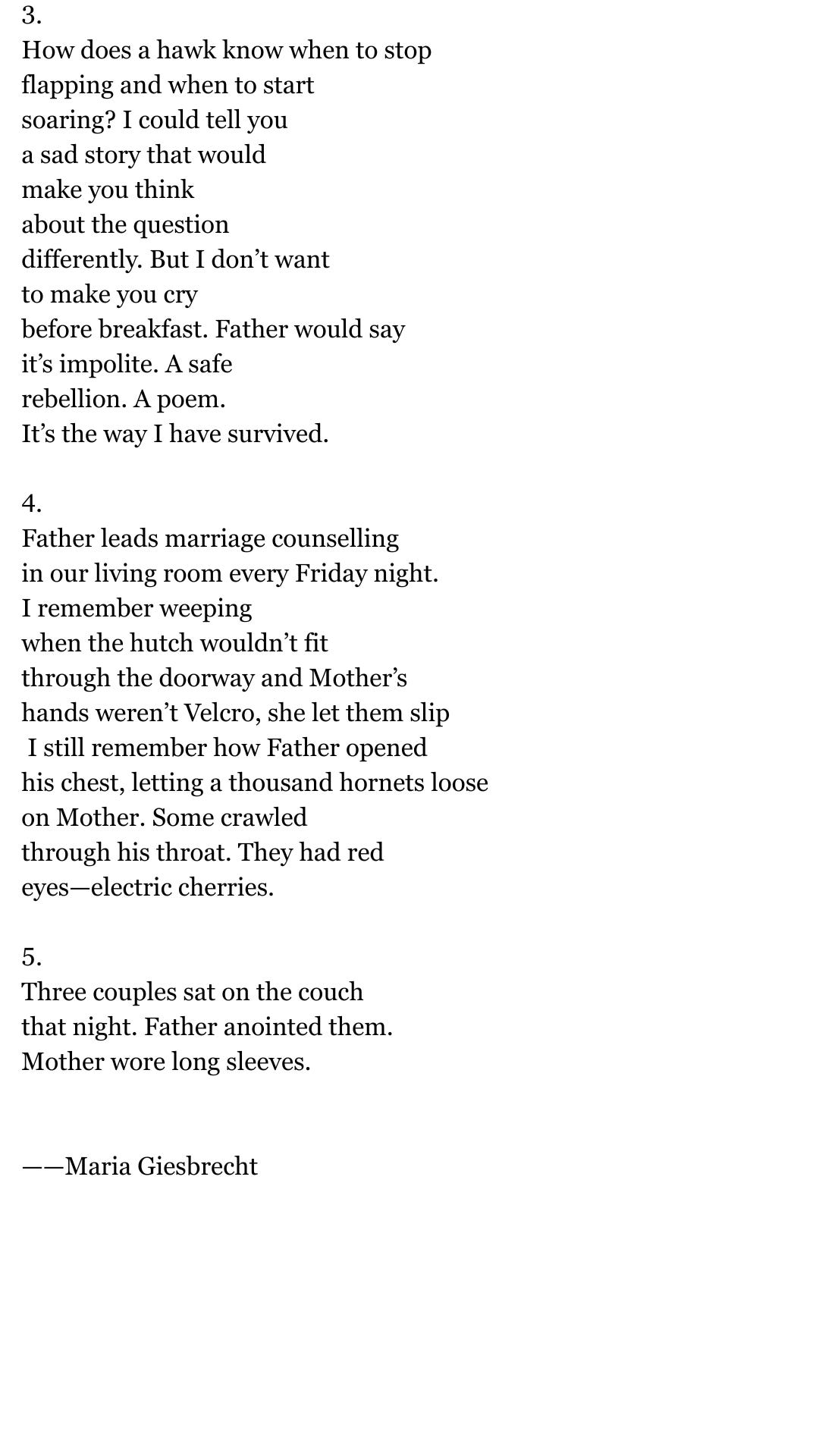
“A safe
rebellion. A poem.”
Or:
“Little buds
on branches. Slow dynamite.”
The closer opposing ideas sit together, the more pressure the language creates.
“Safe rebellion” feels contradictory. Rebellion should be dangerous. But poetry often is a contained form of rebellion — emotional risk housed inside language.
Likewise:
“Slow dynamite”
combines gentleness and destruction. Growth and catastrophe. Beauty and danger.
This is part of why the poems feel alive: they refuse emotional simplicity.
The poems understand that tenderness and violence often coexist. Desire and shame. Love and resentment. Beauty and grief.
Try This:
Take an emotion in your poem and complicate it.
Place contrasting ideas beside one another:
holy hunger
soft violence
beautiful ruin
obedient wildfire
gentle catastrophe
Or try placing emotionally opposite images near each other within the poem.
Tension is often born through contrast.
5. Argument Through Image
One of my favorite things Maria does is allow the ending image to become an argument.
Instead of summarizing the poem emotionally, she leaves us with an image that contains implication.
From White Birds:
“My collection, my prized white birds—
if sold at auction, might save the world.”
Or from Father Leads Marriage Counseling In Our Living Room:
“Three couples sat on the couch
that night. Father anointed them.
Mother wore long sleeves.”
The poem never explains these endings directly.
But emotionally, we understand them.
That’s because the poem has already built the scaffolding necessary to support the image:
tension
narrative
emotional layering
repetition
implication
So by the time we reach:
“Mother wore long sleeves”
the image carries enormous emotional weight.
The poem trusts the reader to arrive there. This is one of the hardest and most effective things a poem can do.
Not:
Here is what this poem means.
But:
Here is the image that contains the meaning.
Try This:
When revising your poem, look at the ending and ask:
Am I overexplaining?
Have I summarized the emotional point?
Could an image do this work more powerfully?
Try deleting the final explanation and replacing it with:
an object
a gesture
a physical scene
an unresolved image
Trust the reader to feel what the poem has already earned.
One of the fastest ways to grow as a poet is to study the specific mechanics of poems you love.
Not just:
I like this poem.
But:
What creates the tension?
Why does this image linger?
How does the poem earn its ending?
What is being withheld?
Where does surprise enter the language?
Craft becomes less mysterious once you start noticing patterns. Often, what looks like innovation is really attention.
Meet Maria at Our New Book Club!

You can buy “A Little Feral” anywhere books are sold. We will discuss the book and meet with Maria on June 10 at 5:00 pm PT.
Please Take 3 Seconds to Vote!
Note: The links provided are affiliate links through The Poetry Shop, an organization run by poets that reinvests in and supports the poetry community.
If this post was helpful, please consider sharing or leaving a ❤️
What’s a craft move you’ve stolen from another poet lately? Drop it in the comments — I’d love to hear.
What a great breakdown. I love this series you've started!
Love it on so many levels