
Write like Caitlin Conlon
5 Craft Moves Used Burning the Ghost Light

Welcome to Under the Influence, a series where we study the poets we love and the craft choices that make their work unforgettable.
Some poetry collections ask to be read. Others ask to be inhabited.
When I first read Burning the Ghost Light by Caitlin Conlon, I found myself lingering inside its world long after I closed the book. The collection unfolds like a theatrical production, complete with a cast list, prop list, stage directions, and recurring characters named simply THE FATHER, THE MOTHER, THE SELF, and THE LOVER.
The result is a manuscript that blurs memory and performance, asking not only what happened, but how we continue rehearsing the stories that shaped us.
The poems move fluidly between realism and imagination, allowing emotional truth to matter more than factual accuracy. Time bends. Ordinary moments become revelations. The speaker talks directly to us, negotiating with both the reader and herself. Even familiar ideas—the absent father, the broken family, the coming-of-age narrative—arrive transformed.
Today I want to look at five craft moves Caitlin uses throughout Burning the Ghost Light. These techniques make the poems feel theatrical, emotionally expansive, and impossible to look away from.
What feels experimental on the page is often built from incredibly deliberate craft.
1. Excavate the Ordinary
Some poets search for extraordinary moments.
Caitlin finds them in grocery stores.
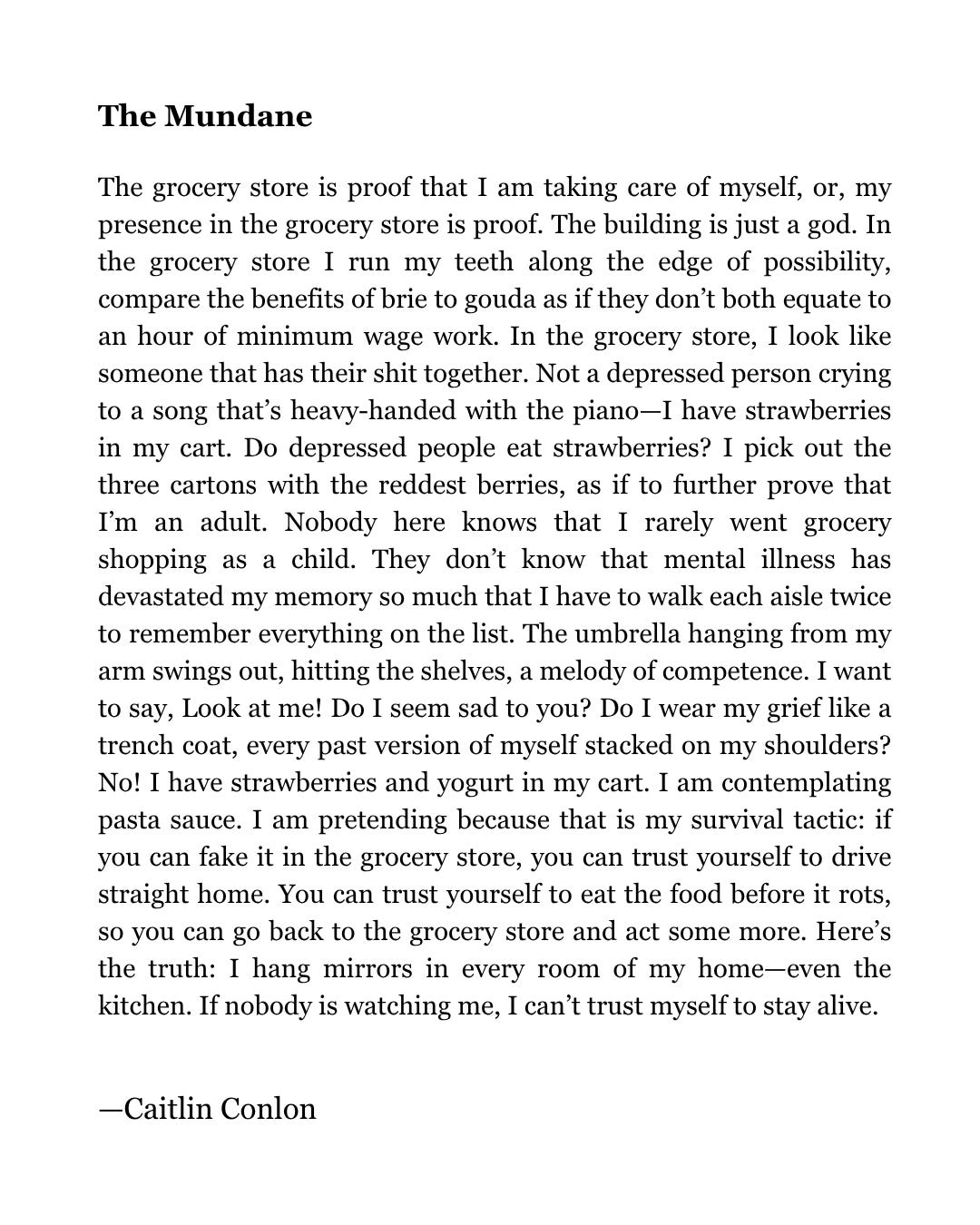
In “The Mundane,” she begins:
“The grocery store is proof that I am taking care of myself...”
What follows isn’t really about groceries. It’s about survival.
Every ordinary decision—choosing strawberries, comparing cheese, pushing a shopping cart—becomes evidence in an internal trial. Is the speaker okay? Is she functioning? Is she convincing anyone, including herself?
The mundane becomes psychologically charged. This is one of the collection’s greatest strengths. Rather than searching for dramatic events, Caitlin teaches us that ordinary rituals often contain our deepest beliefs.
Try This
Choose one routine:
folding laundry
brushing your teeth
buying coffee
watering plants
Instead of describing the action, ask:
What is this ordinary moment trying to prove?
Sometimes the smallest gestures carry the largest emotional stakes.
2. Time Travel
One of Caitlin’s most striking techniques is her willingness to manipulate time.
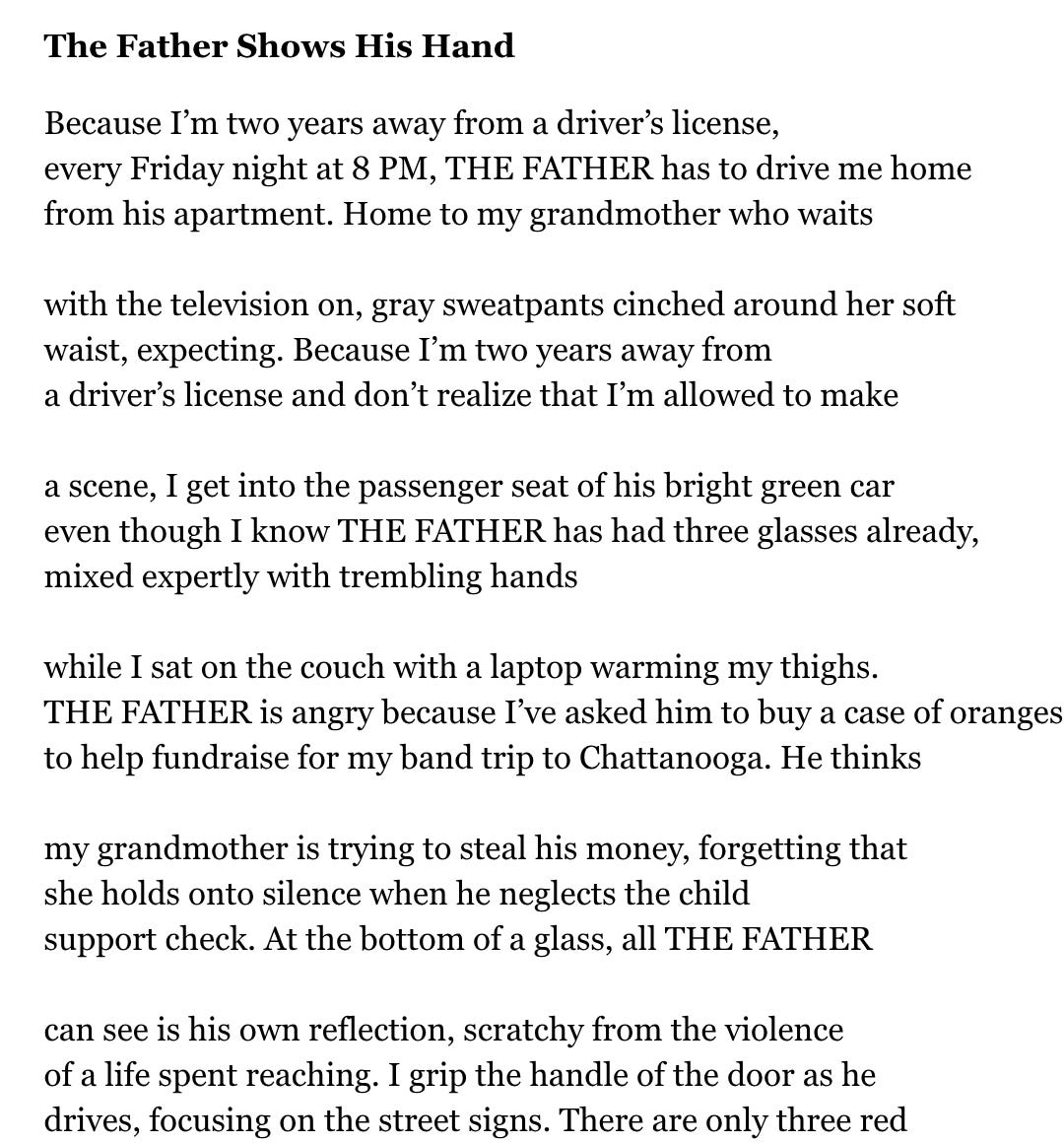
From “The Father Shows His Hand"
“Ten years after leaving his apartment we pull into the driveway of my childhood home.”
Within a single sentence, ten years pass during a car ride.
Of course, this isn’t literally happening. Instead, the poem allows emotional time to replace chronological time. The drive feels endless because the speaker has carried it for a decade. By collapsing past and present together, the memory becomes larger than the event itself.
Poetry doesn’t have to obey clocks. A single second can last an entire page. A lifetime can fit inside one line.
Try This
Think about an important memory in your life.
Now ask:
What if one minute lasted ten years?
What if childhood and adulthood occupied the same scene?
What if the future interrupted the past?
Sometimes emotional truth asks us to distort time in order to tell it honestly.
3. Bend Reality
Caitlin frequently allows impossible things to happen without announcing that they’ve become impossible.
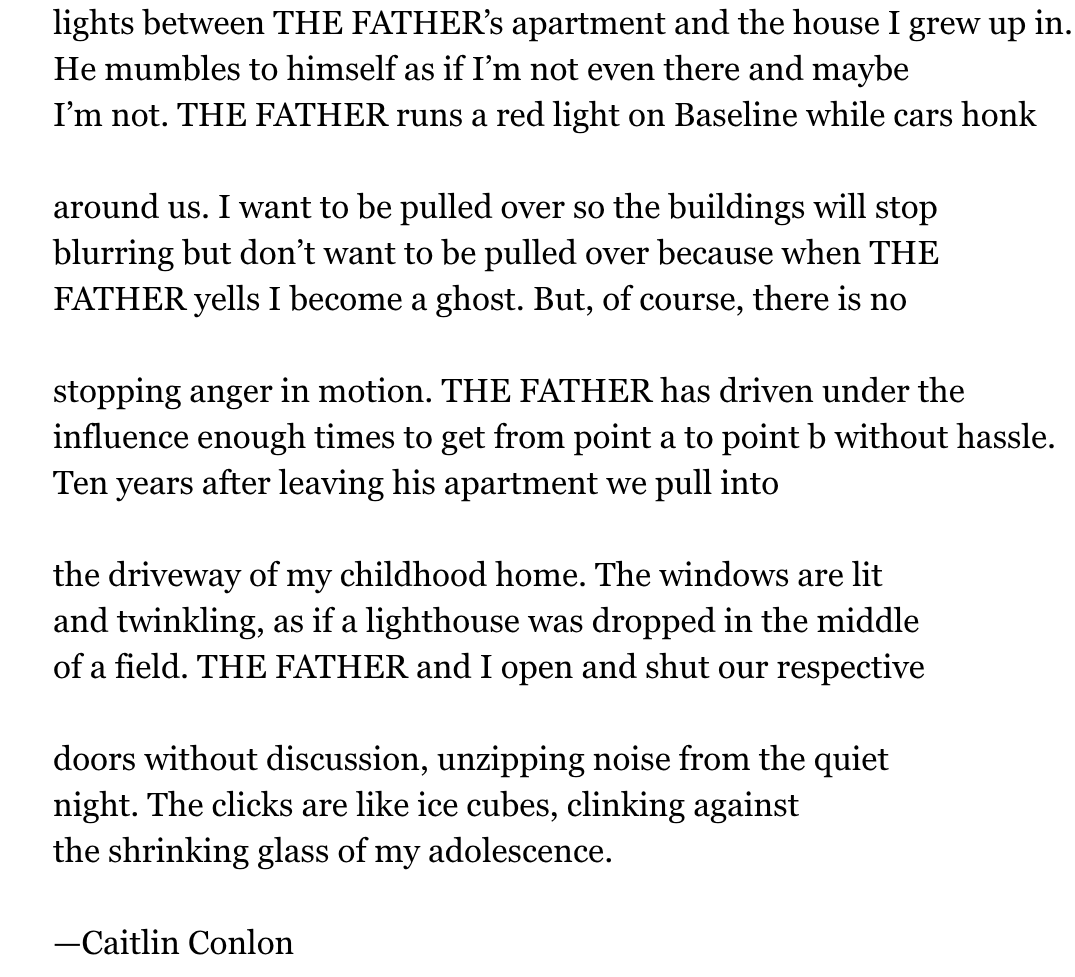
In “The Father Shows His Hand,”she writes:
“He mumbles to himself as if I’m not even there and maybe I’m not... because when THE FATHER yells I become a ghost.”
She doesn’t pause to explain the metaphor. The poem simply accepts that becoming a ghost is now part of its reality. That’s what makes the moment powerful.
The surreal image isn’t ornamental. It reveals something realism can’t fully express: how fear can erase a person while they’re still standing in the room.
Poetry doesn’t always need to describe reality. Sometimes it reveals it by breaking its rules.
Try This
Take a real memory and allow one impossible thing to happen.
Maybe:
shame makes you invisible
grief changes the weather
joy teaches your house to breathe
loneliness removes your reflection
Once you’ve changed the rules, don’t apologize for them. Commit to the world you’ve created.
4. Break the Fourth Wall
Throughout the collection, Caitlin refuses to let the reader remain invisible.
She asks us questions. She argues with us. She negotiates with us.
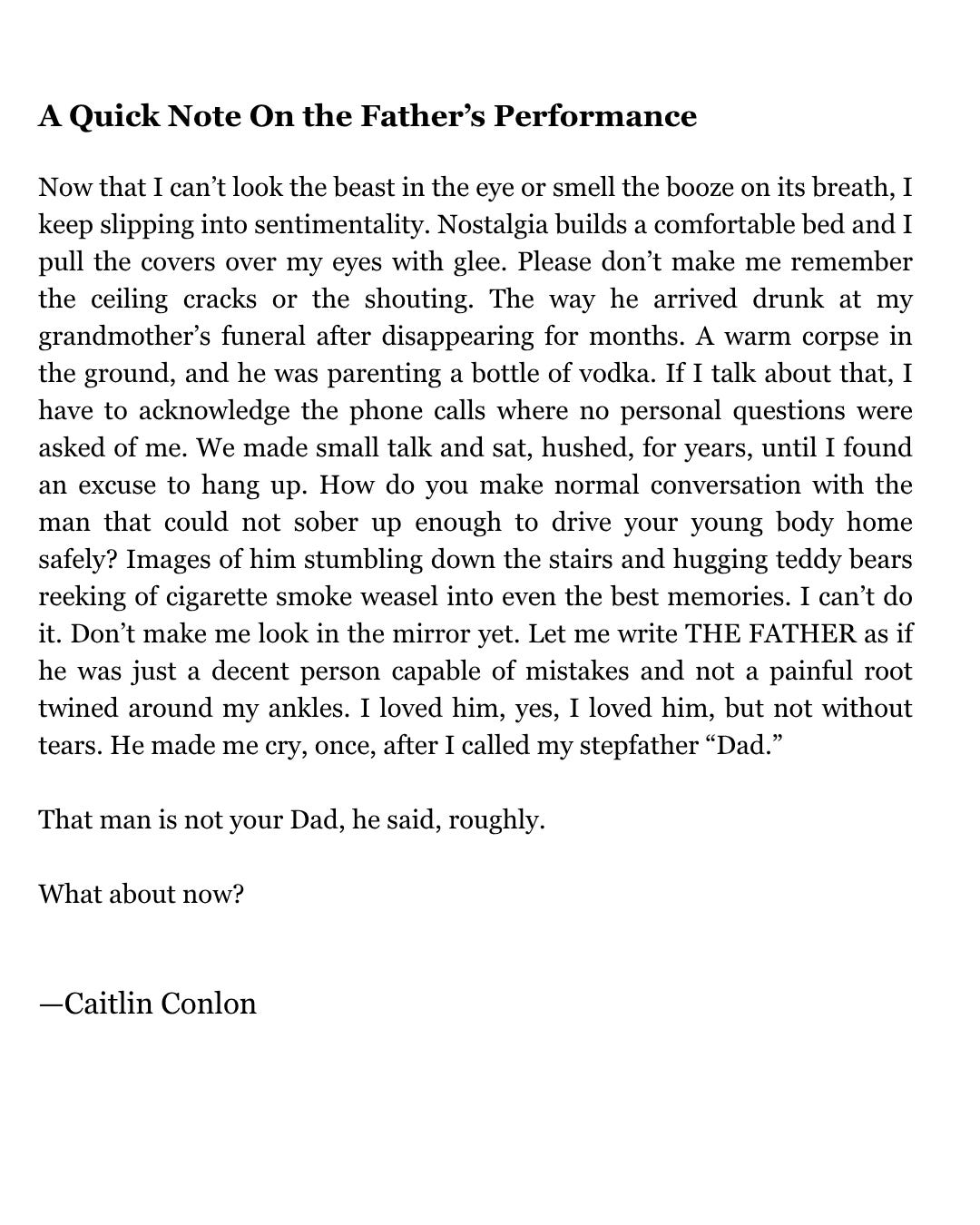
From “A Quick Note on the Father’s Performance:”
“Please don’t make me remember the ceiling cracks or the shouting.”
Later:
“Don’t make me look in the mirror yet.”
These moments feel almost theatrical—as though the speaker has stepped to the edge of the stage to confide directly in the audience.
The result is intimacy. Instead of pretending the poem exists alone on the page, Caitlin acknowledges the reader’s presence.
The poem becomes conversation instead of confession.
Try This
Write directly to your reader.
Try beginning sentences with:
Don’t make me...
Let me...
I know what you’re thinking...
Stay with me...
Can we pretend...
Questions, requests, bargaining, and confession can create extraordinary emotional closeness.
5. Twist Tropes
Burning the Ghost Light contains familiar literary figures: the father, the mother, the lover, the self
At first glance, they feel archetypal. But Caitlin continually complicates them.
The father isn’t simply a villain. The speaker isn’t simply a victim. Memory isn’t simply nostalgic.
Even metaphors arrive unexpectedly:
“Do I wear my grief like a trench coat...”
Or:
“...he was parenting a bottle of vodka.”
These images begin with something recognizable before veering somewhere surprising.
That’s the secret. Readers love familiarity. They remember surprise.
Try This
Start with a familiar trope:
the hero
the villain
the mother
the coming-of-age story
the broken family
Now ask yourself:
How can I betray the reader’s expectation?
Maybe the villain is tender. Maybe the hero refuses the quest. Maybe grief dresses like confidence. The strongest poems don’t reject familiar ideas. They reinvent them.
One of the fastest ways to grow as a poet is to become an attentive reader.
Don’t just ask:
Why do I love this poem?
Ask:
How is time moving?
Where does reality shift?
Why does this ordinary image matter?
When does the poet invite me into the poem?
How are familiar stories being made strange?
Craft becomes less mysterious once you begin recognizing its patterns.
The magic isn’t disappearing. You’re simply learning how it’s made.
One of the Year's Most Innovative Collections

Reserve your spot and join us for an intimate conversation with Caitlin Conlon. You’ll leave with fresh insight into the making of an unforgettable poetry collection—and inspiration for your own work.
Haven’t had time to read the book? No problem. Whether you’ve finished every page or are simply curious about the craft, you’ll leave with practical insights you can bring to your own writing.
Love this!
It is such a treat for me to see you analyze my poems, Kelly!!! I can’t wait to chat about this book with you & everyone that attends! ❤️